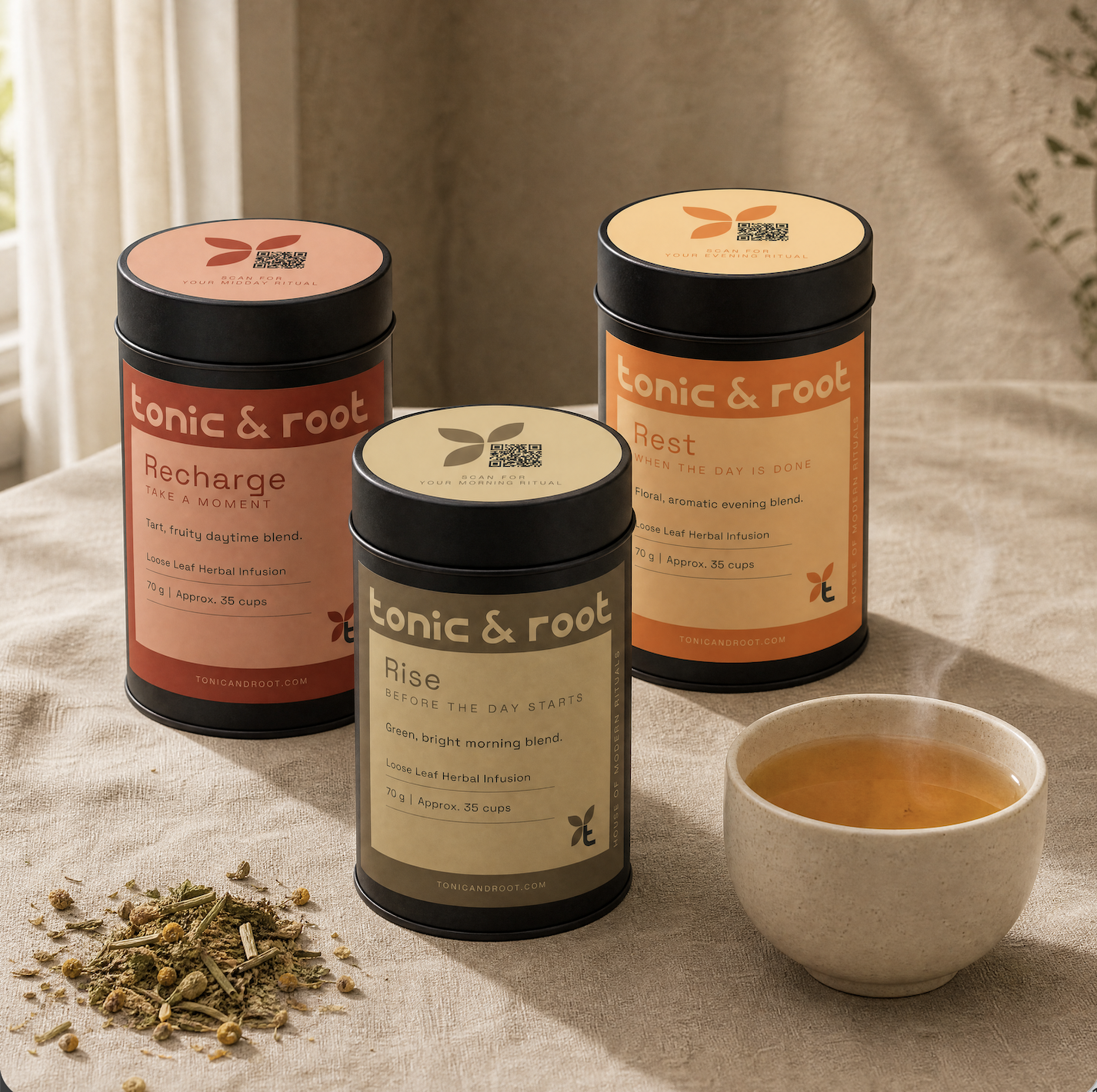
After working with numerous founders, one thing I realised is that most brands don’t start with a five-year plan. They start a lot messier than that, often with no clear strategy, roadmap on where to go or brand story in mind.
That’s exactly how Tonic & Root began: at a kitchen table, at 11pm, with its founder Froya covered in loose herbs.
A founder running on borrowed energy
Froya spent years working on yachts, facing long days, high work pressure and zero downtime. She wasn’t sick, exactly nor “burnt out enough” to stop. What she was though was running on fumes, borrowing energy from tomorrow, day after day.
It took the weeks before a major surgery for something to shift. For the first time, Froya stopped pushing through and started properly preparing: stripping things back to simple food, real rest, and tea. Not tea for flavour but tea made the way her grandmother had taught her while foraging as a child: plants used for exactly what they’d always been used and intended for.
She sat at that dining table filling teabags by hand, blend after blend. And somewhere in that quiet, repetitive act, she realised that she probably wasn’t the only person who felt like they were borrowing tomorrow’s energy just to get through the day.
That’s the moment Tonic & Root was born. Not only to be a tea brand, but as an answer to a very specific, very familiar kind of tiredness.
Building a brand story that didn’t exist yet
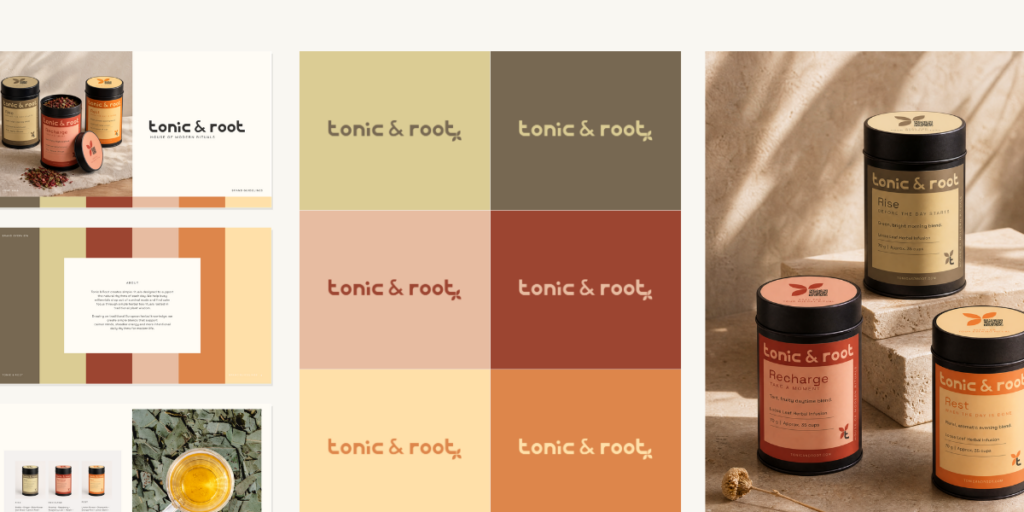
When Froya brought us her story, she didn’t ask for a trendy tea brand. She envisioned something as grounded as the brand’s story itself: calm, rooted in tradition, without tipping into clinical or overly “wellness-led.”
So that’s what we built: a visual identity in earthy but bright tones, clean typography, and just enough of a modern edge to capture the current zeitgeist.
But the real shift happened on a strategic level:
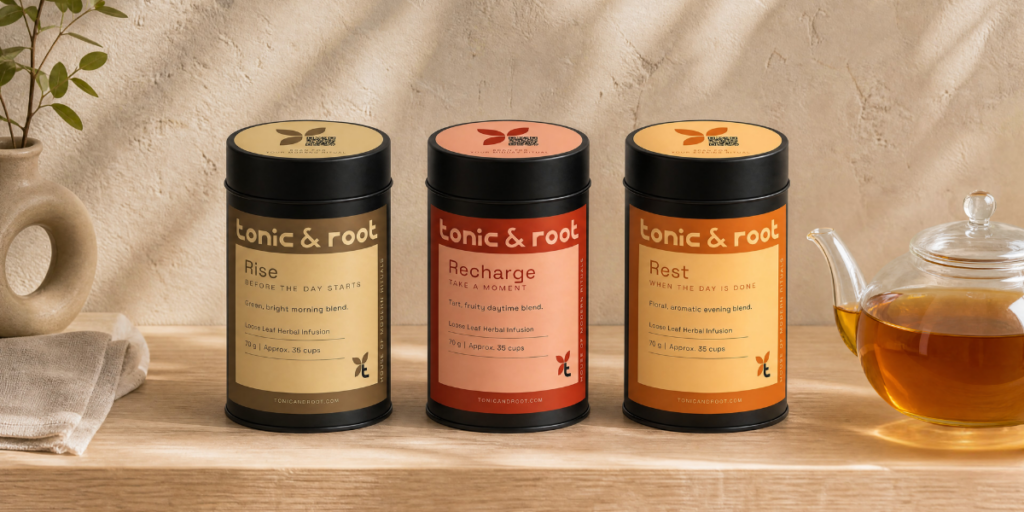
Rather than building another tea brand, we built a House of Rituals – a brand that holds space for the morning, midday, and evening moments people already have, and helps them return to those moments with a little more intention.
Tonic & Root was never only about drinking tea. It is a lot more about the little moments throughout the day:
- The small pause before the day starts
- The moment of reset in the middle of it
- The slow wind-down at the end
Small, steadying rituals people come back to, again and again, to feel a bit more like themselves.
Why I am sharing this
I am sharing Froya’s story not just because it’s a good story (though it is), but because I suspect a fair few of you reading this are sitting on your own version of it.
Maybe it’s the brand you keep sketching out in a notes app at midnight. Maybe it’s the career you’ve long outgrown. Or maybe it’s just a feeling that there’s a steadier, more intentional way to do things and you just haven’t given yourself permission to build it yet.
Froya didn’t have a five-year plan when she started filling those teabags by hand. She had a genuine desire to feel better, her grandmother’s foraging knowledge, and a willingness to start small and honest instead of big and polished.
That’s usually how it goes.
Have your own pivot brewing?
That’s the story behind Tonic & Root – a brand built and shaped (with a lot of tea breaks of our own) into something we’re genuinely proud of.
If you’ve got your own pivot brewing, I’d love to hear about it. And if you’re ready to build the brand to go with it, book a Brand Clarity Session – I’ll help you figure out where to start.
x, Lara
